
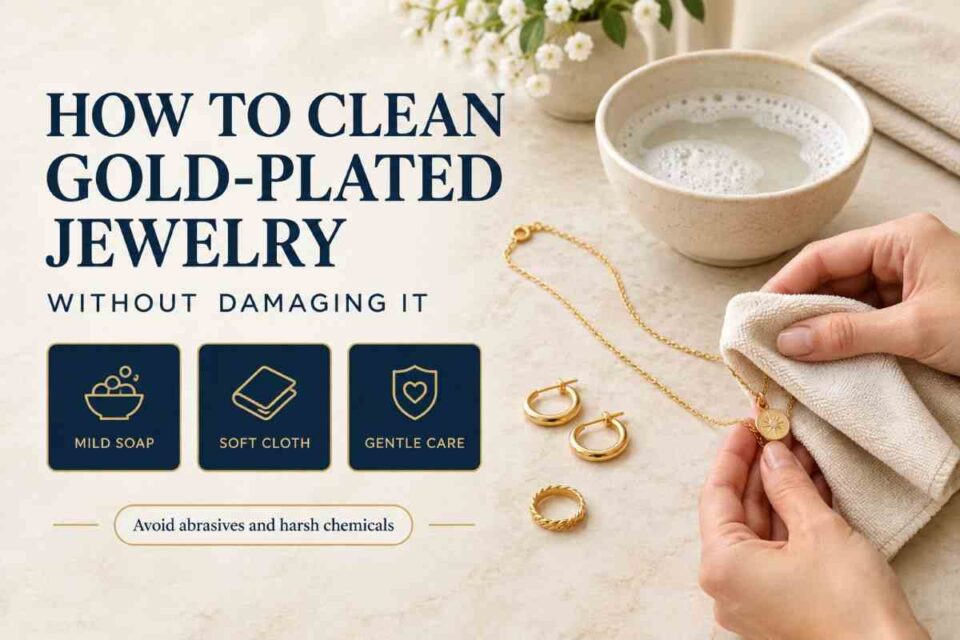
Gold-plated jewelry can lose its shine when it collects sweat, skin oils, perfume and everyday dirt. The safest way to clean it is to start with a soft, dry cloth and avoid anything abrasive that could wear away the thin gold surface.
For lightly marked pieces, gentle wiping may be all you need. If your gold-plated jewelry has heavier residue, a barely damp cloth may help, but check the manufacturer’s care instructions first. Some pieces contain delicate gemstones, glued details or materials that should not be immersed in water.
This guide explains how to clean gold-plated necklaces, rings, bracelets and earrings, which products to avoid, and how to keep the finish looking good for longer.
Table of Contents
What You Need to Clean Gold-Plated Jewelry
Gather a few simple items before you begin:
- A clean, soft microfibre or cotton cloth
- A second soft cloth for drying
- A small bowl of clean water, if damp cleaning is suitable for the piece
- A little mild, fragrance-free soap, only if the manufacturer’s instructions allow it
- A soft, lint-free towel for placing the jewelry on while you work
You do not need a specialist polishing kit for routine care. In fact, some jewellery polishing cloths contain compounds designed to remove tarnish, which can be too abrasive for a plated surface.
Avoid using a cloth that has been used for household cleaning. Tiny particles of grit or leftover cleaning products can scratch the finish.
How to Clean Gold-Plated Jewelry Step by Step
1. Inspect the Piece Before Cleaning
Look closely at the jewelry under good lighting. Check for loose stones, damaged clasps, worn areas or parts where the base metal may already be showing.
If the gold colour has worn away, cleaning will not restore the missing plating. Stop if the piece is damaged or contains delicate details that could be loosened by rubbing or moisture.
For jewelry with pearls, opals, glued stones or mixed materials, follow the maker’s instructions rather than assuming that a method suitable for plain metal will be safe.
2. Wipe It With a Soft, Dry Cloth
For everyday fingerprints, light dust and skin oils, begin with a clean, dry cloth.
Gently wipe the surface without pressing hard. Work around chain links, clasps and decorative details carefully, taking care not to catch the cloth on prongs or small fittings.
This is often the best routine after wearing a necklace, bracelet or pair of earrings. It removes surface residue without introducing unnecessary moisture.
The key rule is to wipe gently rather than polish vigorously. Repeated friction can gradually wear down the gold layer, particularly on rings, bracelet edges and other areas that experience regular contact.
3. Use a Slightly Damp Cloth if Needed
If dry wiping does not remove the residue, check whether the piece can safely be cleaned with water.
Dampen a soft cloth with clean, lukewarm water and wring it out thoroughly. Wipe the affected area gently rather than soaking the jewelry.
If the manufacturer’s instructions permit soap, use a very small amount of mild soap diluted in water. Wipe away the residue with another clean, slightly damp cloth, taking care not to leave soap trapped in small details.
Do not immerse a piece simply because it is gold-plated. Water may affect glued components, certain gemstones or other parts of the design.
4. Dry the Jewelry Completely
Use a clean, soft, lint-free cloth to remove moisture as soon as you finish cleaning.
Pay attention to chain links, settings, clasps and other areas where water can collect. Leave the item to air-dry completely in a safe place before storing it.
Avoid rubbing hard to speed up drying. Gentle blotting and wiping are enough.
5. Store It Once It Is Dry
Place the clean jewelry in a dry, lined jewelry box or a soft pouch. Store individual pieces separately to prevent chains from tangling and metal surfaces from rubbing against each other.
Keeping jewelry dry and protected between wears is just as important as cleaning it properly.
What Should You Never Use on Gold-Plated Jewelry?
Gold plating is a surface coating, not a solid layer of gold throughout the item. Abrasive cleaning and unsuitable chemicals can damage that coating or expose the underlying metal.
Avoid the following:
| Product or method | Why to avoid it |
|---|---|
| Toothpaste | Can contain abrasive ingredients that scratch the finish. |
| Baking soda or abrasive powders | Rubbing particles can wear away the plating. |
| Vinegar and lemon juice | Acidic cleaners may affect the finish or other materials in the piece. |
| Bleach and household cleaners | Chemicals can damage the plating and exposed base metals. |
| Silver dips and metal polish | Products intended for other metals may be unsuitable for plated jewelry. |
| Rough cloths and hard brushes | Friction can scratch or remove the surface coating. |
| Ultrasonic or steam cleaners | Vibration, heat or cleaning conditions may damage plating, stones or glued components. |
Do not use a chemically treated gold or silver polishing cloth unless its manufacturer specifically confirms that it is suitable for your particular plated item.
These precautions are consistent with the care advice from Jewelers Mutual and jewellery care guidance from Roberts & Co.
How to Clean Different Types of Gold-Plated Jewelry
The same gentle approach applies to most plated pieces, but the design can change how you should clean them.
Gold-Plated Necklaces and Chains
Wipe the chain gently with a soft cloth, following the links rather than pulling the chain through the fabric. Pay attention to the clasp and areas where lotion or perfume may collect.
Avoid stretching delicate chains or scrubbing intricate links. If dirt is trapped in a small space, seek advice from a jeweller instead of trying to scrape it out.
Gold-Plated Rings and Bracelets
Rings and bracelets often experience more friction than earrings because they touch other surfaces throughout the day.
Wipe away skin oils after wearing them and remove them before household cleaning, exercise or activities that expose them to chemicals. If the gold colour is visibly fading around the edges, additional polishing will not repair it.
Gold-Plated Earrings
Wipe the front, back and posts gently, taking care around decorative stones and delicate settings. If the earrings have pearls, glued embellishments or other sensitive materials, use only the cleaning method recommended for the complete piece.
For earrings worn in piercings, keep the jewelry clean according to the maker’s instructions and avoid applying harsh cleaning products directly to the metal or piercing area.
How to Prevent Gold-Plated Jewelry From Losing Its Shine
Good everyday habits can reduce the need for deeper cleaning and help limit premature wear.
- Put jewelry on last: Apply perfume, hairspray, sunscreen and skincare products first, then allow them to dry before wearing your jewelry.
- Remove it before showering or swimming: Water, chlorine and salt water can affect the finish over time.
- Take it off before exercise: Sweat, friction and moisture can contribute to wear.
- Remove it before household chores: Cleaning products may contain chemicals that damage plated surfaces.
- Wipe it after wearing: A quick pass with a soft cloth helps remove skin oils and residue.
- Store it separately: Keep each piece in a dry pouch or lined compartment, away from other jewelry.
- Avoid unnecessary polishing: Frequent rubbing can be more harmful than leaving a small mark alone.
Gold plating wears naturally over time, and its lifespan varies with the coating, the design and how the item is used. Care can slow avoidable damage, but it cannot make the plating permanent.
What If Gold-Plated Jewelry Looks Tarnished or Faded?
First, consider whether the change is caused by surface dirt or by wear.
If the jewelry looks dull after contact with skin oils, a gentle wipe may improve its appearance. However, if you can see a different-coloured metal underneath, the gold coating may have worn through.
Discolouration can also come from the base metal reacting with moisture or other substances after the coating becomes thin or damaged. More aggressive cleaning will not replace the missing gold.
For a valuable or sentimental piece, ask a qualified jeweller to inspect it. Depending on the item’s construction and condition, professional cleaning or replating may be possible. Replating adds a new surface layer; it is not the same as ordinary cleaning.
Frequently Asked Questions
Can you clean gold-plated jewelry with dish soap?
A small amount of mild soap diluted in lukewarm water may be suitable for some pieces, but not all. Check the manufacturer’s instructions first, especially if the jewelry contains gemstones, pearls or glued components. For light marks, start with a soft, dry cloth.
Can you use toothpaste to clean gold-plated jewelry?
No. Toothpaste can contain abrasive ingredients that scratch the surface and wear down the gold coating. Use a soft cloth and a cleaning method approved for the specific piece instead.
How often should gold-plated jewelry be cleaned?
Wipe it gently after wearing to remove oils and moisture. Use a deeper cleaning method only when needed and when the manufacturer confirms that it is suitable. Frequent scrubbing is unnecessary and can speed up wear.
Can faded gold-plated jewelry be restored at home?
Cleaning can remove some surface residue, but it cannot replace gold plating that has worn away. A jeweller may be able to replate the piece if its materials and construction allow it.
Is it safe to wear gold-plated jewelry in the shower?
It is better to remove it before showering. Repeated exposure to water, soap and other products can contribute to wear and affect the appearance of the finish over time.
Keep Your Gold-Plated Jewelry Looking Its Best
The safest cleaning routine is simple: wipe gently with a soft cloth, use moisture only when the piece allows it, dry it fully and store it separately. Avoid abrasive products, harsh chemicals and vigorous polishing.
If the gold colour has already worn away, stop cleaning and ask a jeweller whether replating is suitable. Treating gold-plated jewelry gently from the start is the best way to preserve its appearance for as long as possible.